What I learned from remastering my 10-year-old albums
In 2015/2016, I wrote songs for two electronic albums titled Concord and Amusements, designed to be the soundtrack for webcomic Crash & Burn. After being Bandcamp exclusive for a decade, in 2026 I decided to remaster them as much as possible, and re-release them for streaming.
I chose to do this for a variety of reasons. I wanted to ensure all my songs are available on my streaming profiles for those who might enjoy them, and (most importantly), I wanted to practice mastering music for streaming using songs I knew, but had not listened to recently.
There were many classic mistakes in these tracks, all of which presented opportunities to find solutions now. Here are the mistakes I made, recommendations for how to avoid them in the first place, and how I tried to fix them 10 years later:
Problem 1: No stems
The biggest challenge was that unfortunately, I no longer had the stems. I underestimated the importance of future-proofing at the time, and never even bounced them. Fortunately I still had the final WAV file for each piece, so I was still able to proceed.
Initially, this was quite restrictive. However, halfway through the project I upgraded to a new Mac Studio with the latest version of Logic Pro, and the stem separation tool was able to give me back a lot of freedom that I had lost. Although it was unable to separate layered synths, it was effectively able to get sub-mixes of all the most important sections cleanly. Honestly, this was almost preferable to having the original stems, because it prohibited decision paralysis and enabled me to avoid getting overwhelmed.
As a bonus, I was also able to convert some of the stems to MIDI, and use that to add new instrumental textures. I didn’t overdo this since I wanted to maintain the original tone, but I did add an extra high-bass part to UNoE (United Nations of Earth) using Spectrasonics Trillian to give it some extra crunch.
This was the first interesting experience showing how far we have come over the course of the past decade. Stem separation is effectively like un-baking a cookie, and when this project was initially created, regaining this level of control would have been impossible.
Lesson learned: Bounce stems as soon as a project is completed
Solution: Use built-in stem separation tools
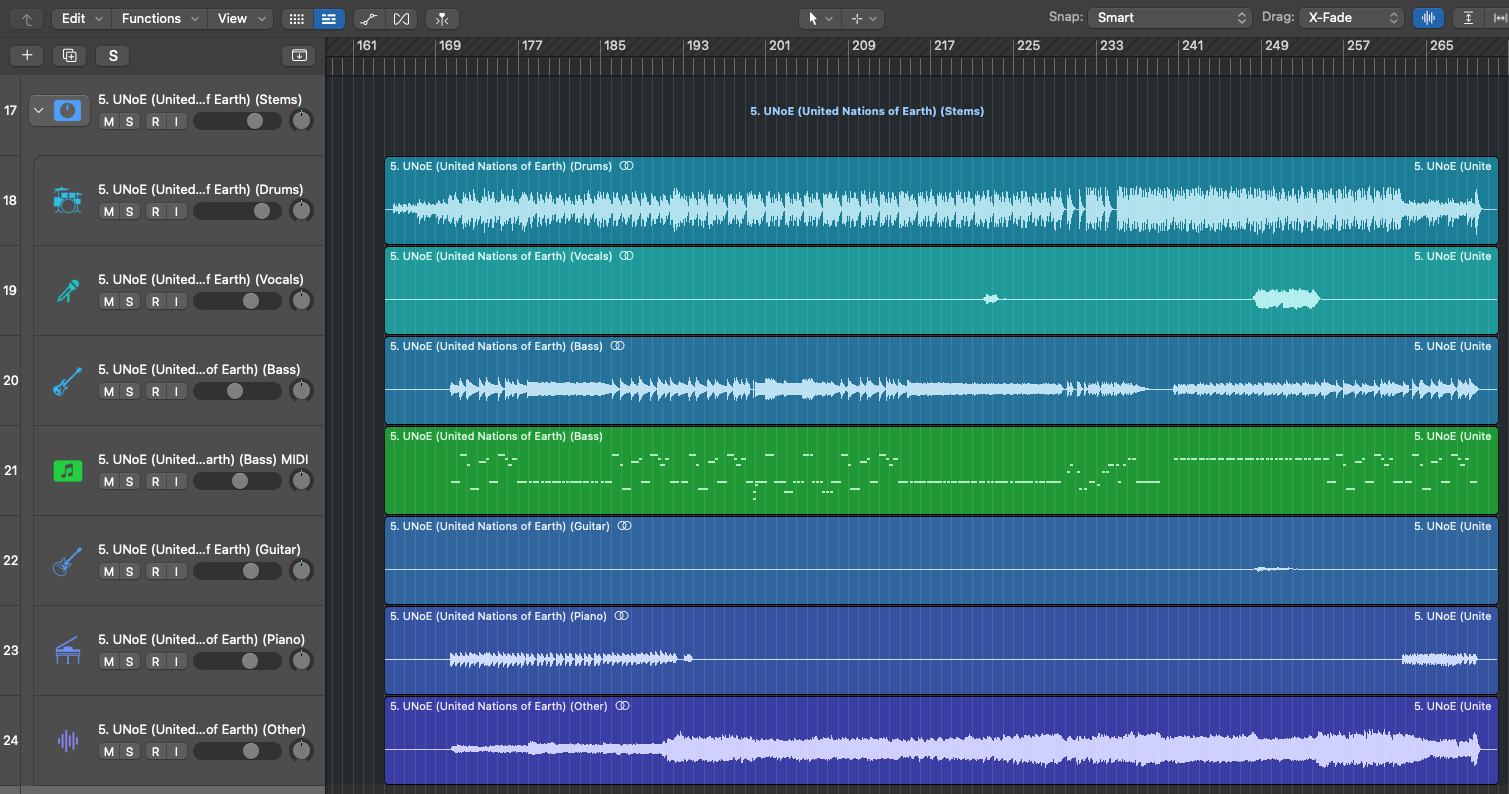
Separated stems from the song UNoE (United Nations of Earth)
Problem 2: overcompression
Primed with horror stories from the loudness wars and terrified of inadequacy, I initially compressed some of these songs to within an inch of their life. In the ancient 90s, this may have been helpful. Now, in a world where a more vibrant dynamic range is rewarded by streaming platforms and expected in electronic genres, things were not good. In some cases, my dynamic range was less than 1db, which is very boring to listen to.
To solve this issue, I used iZotope Neutron 4 Transient Shaper to identify the small transients in the song (which were fortunately still audible), and boost them significantly, restoring some punch.
Lesson learned: Avoid over compression by maintaining at least 3-5db of dynamic range
Solution: Used a transient shaper to emphasize the beginning of each identified transient
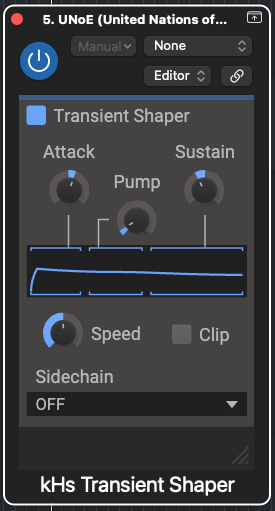
kHs Transient Shaper with boosted attack
Problem 3: muddy low mids
Admittedly, I still sometimes find it hard to hear issues in the 200-500hz range of a song. I am still using the same ATH-M50x headphones I initially wrote these songs on, so although I am now extremely comfortable with their sound (and extremely impressed by their longevity), I had to rely on multiple other methods to ensure this frequency range was as clean as possible.
Fortunately, my home studio now contains Tannoy speakers with pretty reliable bass frequency representation, so it was easy for me to hear that multiple songs had issues in this area.
Almighty (Netza’s Theme) was one of the most egregious. The kick was very boomy, and was taking up a lot of space that should belong to the bass.
To fix this, I used iZotope Neutron 4 Multiband Compressor, and split the stereo range into 3 sections: <100 hz, 200-500 hz, and >500 hz. I used a slow attack in the lowest range to reduce the frequencies around the kick after it hits, while still letting the impactful part of the kick through.
Additionally, I used Fabfilter Pro Q-3 EQ to dynamically control problem frequencies.
Lesson Learned: Avoid muddiness by carefully carving the <500hz frequency range
Solution: Used a delayed attack on a multiband compressor to clean up kicks, use a dynamic parametric EQ to make precise cuts
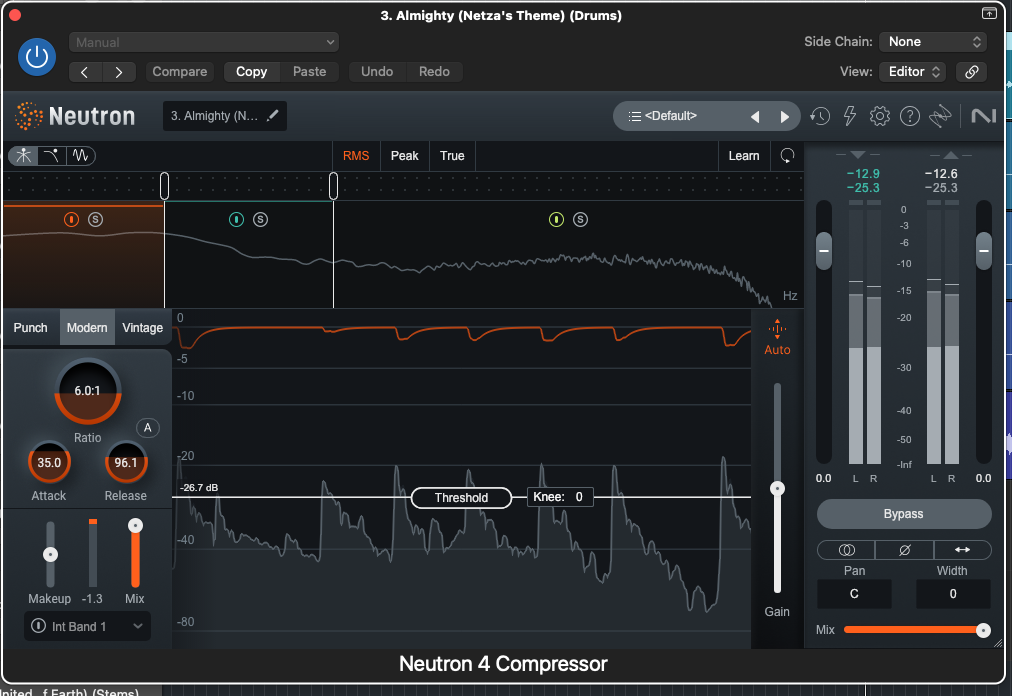
iZotope Neutron 4 plugin showing dips after the kick hits, cleaning up mud
Problem 4: Wide Bass, not-wide-enough Highs
I initially did a few things right with the stereo field of these tracks. The instruments are panned similar to an orchestra in many places, giving them some motion.
However, I also made a glaring error: I didn’t set my bass to mono. This meant that boomy low notes were taking up far too much of the stereo width, making the higher frequencies appear quieter.
It’s easy to forget that a song has a finite space, much like a painting on a canvas, and anything taking up too much space can inhibit everything else. Since the human ear cannot distinguish stereo width below approximately 200hz, it is almost always advisable to set it to mono.
To fix this, I used Fabfilter Pro Q-3 to gently cut all bass only from the sides. This let the bass take up space in the middle, where it belongs.
On the other side, there was a missed opportunity to spread the higher frequencies across the stereo width. Much like how the flutes an clarinets are positioned to the front and side of an orchestra, I wanted to make the song feel more interesting and spatially dynamic. So, I used logic’s built-in spreader to gradually increase the width of the upper mids. This made the songs more fun to listen to, especially on headphones.
Of course it would have been better if I had panned my instruments in more exciting ways initially, but these steps still really helped
Lesson: Avoid wasting stereo width
Solution: Set the bass to mono, and gradually increase width in the higher range
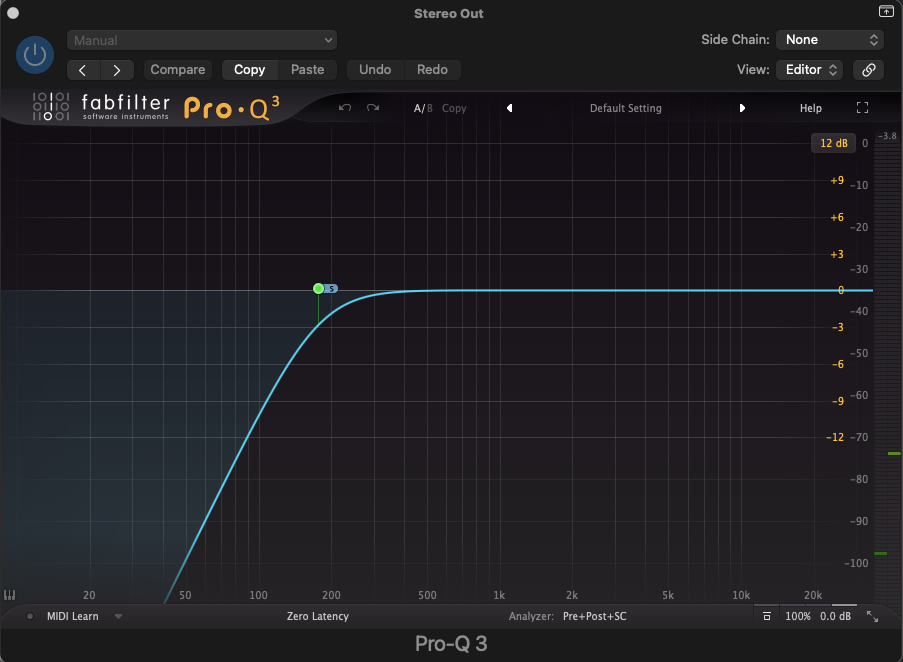
Fabfilter Pro Q 3 with a relatively harsh cut to the sides, setting the bass to mono-only.
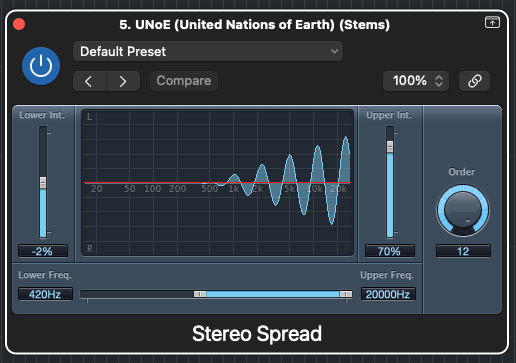
Logic’s built-in stereo spread only affecting high frequencies
Problem 5: drums too quiet
The drums were definitely an afterthought in my initial arrangements, and almost all of them were too quiet. Stem separation did a lot to resolve this, but it wasn’t enough.
In addition to stem separation, I also used sidechain compression to gently reduce the bass whenever the kick hit. This let the kick come through more cleanly, and get out of the bass’s way. Frankly, this might be what I am proudest of across the whole project. They were an obvious afterthought before, but now they are mostly as hard-hitting as they deserve to be.
Lesson: Document sample clearance, or just make sure they’re significantly altered for uniqueness
Solution: Add fun multi-effects with Transit 2 (or any other distortion plugin)
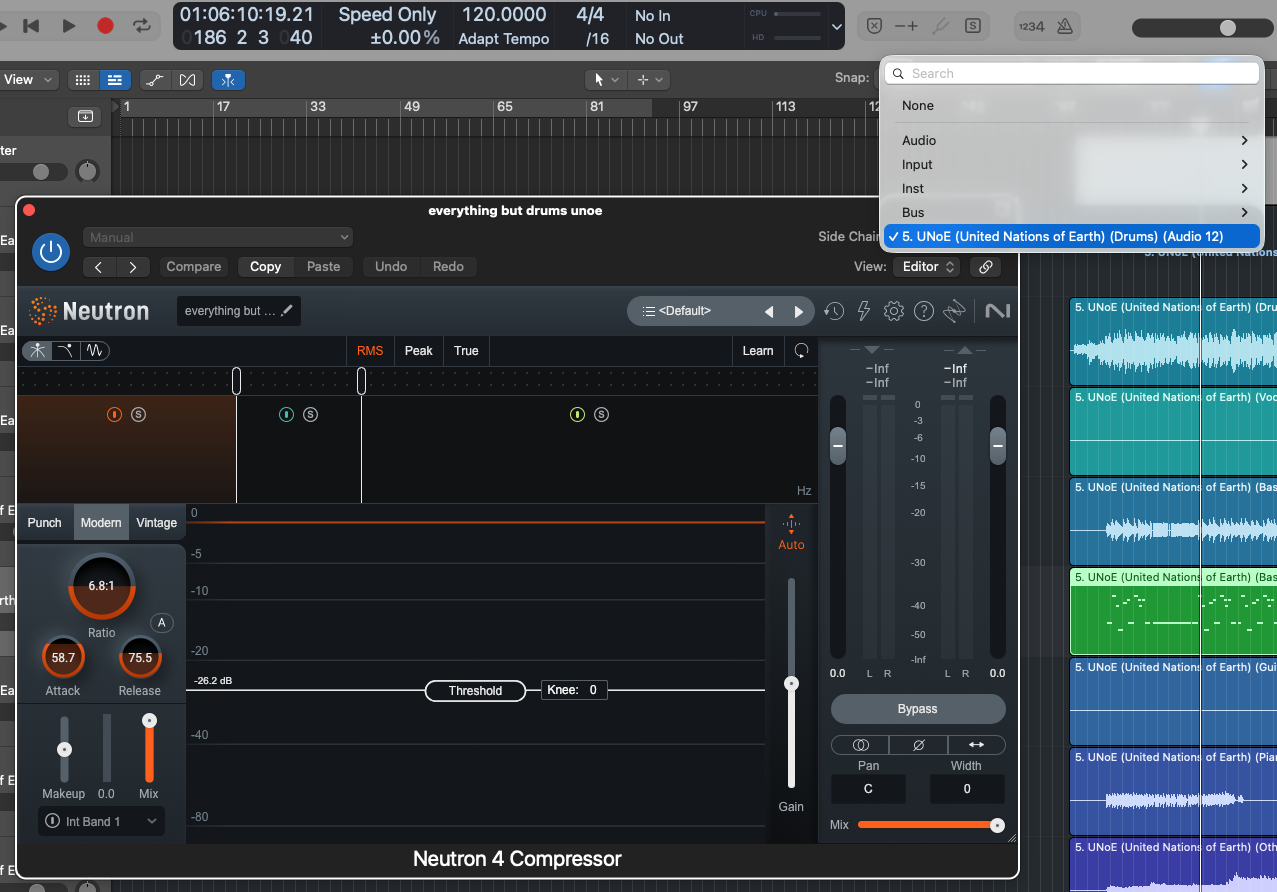
Neutron 4 Sidechain compression, causing the bass to dip with the kick
Problem 6: Rights
When I was finally done, I submitted the songs to Landr for distribution. Unfortunately, one of my songs had a sample I was fairly certain I owned at the time, but I could no longer prove I had the rights to use it. This meant I had to make last-minute changes, to make sure the sample was unrecognizable (and therefore copyright-safe).
Luckily, the sample in question was an air raid siren sound effect at the beginning of Overture, and since it was right at the top of the song, it was easy to alter. To make this change quick and fun, I used Baby Audio Transit 2 to turn the siren into a more distorted wind-up effect. This enabled it to fulfil the same function musically, while also becoming unique enough to bypass any copyright concerns.
Lesson: Document sample clearance (or modify them enough to maintain uniqueness)
Solution: Manipulate sample with a fun multi-tool like Transit 2
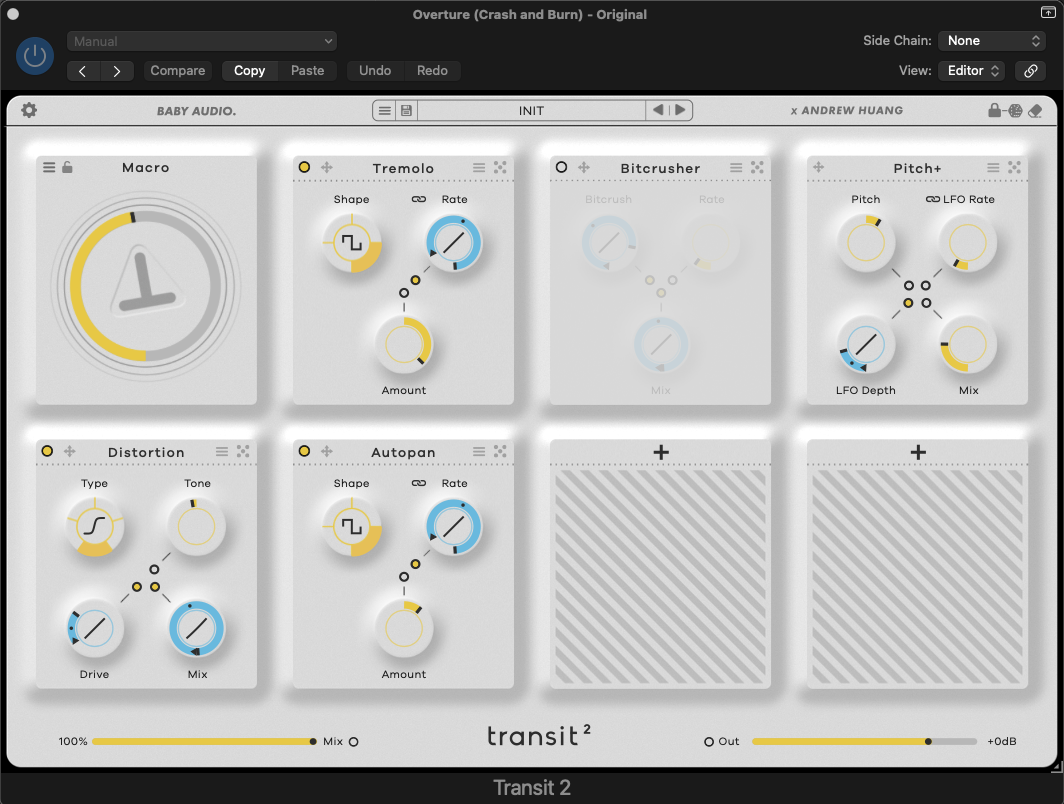
Transit 2 effects applied
Conclusion
Thank you for reading this post, and if you would like to support this project further, you can hear all 9 songs in this anniversary edition via either of the links below.